
Discover the best types of acoustic solutions for home interiors to enhance sound quality and style in your modern living space. Learn more!


Singapore’s compact, open-plan homes are brilliant for modern living, but they come with a sound problem. Hard surfaces, high ceilings, and minimal soft furnishings act like echo chambers, bouncing noise around every room. Choosing the right types of acoustic solutions for home interiors means balancing performance with aesthetics, especially when your space doubles as a design statement. This guide breaks down every major option, from decorative panels to ceiling clouds, so you can make a confident, informed choice for your home.
Table of Contents
- Key takeaways
- The core criteria for selecting acoustic solutions in home interiors
- Popular types of acoustic panels and home sound solutions
- Comparing acoustic solutions: performance, aesthetics, and suitability
- How to choose the right acoustic solution for your Singapore home
- My experience integrating acoustics into Singapore homes
- Explore acoustic and interior design expertise at Tspacemall
- FAQ
Key takeaways
| Point | Details |
|---|---|
| Acoustic treatment vs soundproofing | These are different goals: treatment reduces echo and improves sound quality, while soundproofing blocks noise transfer between spaces. |
| NRC ratings have limits | NRC measures mid-frequency absorption only; check full octave-band data, especially at 125 Hz, for true bass performance. |
| Seal gaps before panelling | Small gaps in doors and walls can undermine any panel solution; sealing first maximises your investment. |
| Layered solutions outperform single fixes | Combining thin decorative panels with a dense foam base delivers far better mid and high frequency control than either alone. |
| Ceiling treatments deliver fast results | Treating the ceiling first is often the quickest way to reduce echo in open-plan or hard-floored Singapore living rooms. |
The core criteria for selecting acoustic solutions in home interiors
Before you browse panels and swatches, it helps to understand what you are actually solving. Acoustic treatment and soundproofing are not the same thing, and confusing the two is one of the most common reasons homeowners end up disappointed. Acoustic treatment improves how sound behaves inside a room. It reduces echo, flutter, and harshness so speech feels clear and music sounds natural. Soundproofing, on the other hand, stops noise from passing through walls and floors to your neighbours or from the corridor into your bedroom.
Absorption versus isolation
Most decorative panels and fabric solutions you will find at a renovation mall are absorbers. They convert sound energy into gentle heat as it passes through their fibrous structure. Isolation requires mass and decoupling, typically achieved through double-wall constructions, resilient channels, or specialist flooring underlays. For most Singapore homeowners, treatment is the priority because the problem is internal echo, not necessarily noise entering from outside.
The NRC rating and why it is only part of the story
The Noise Reduction Coefficient, or NRC, is the standard measure for acoustic panels. A panel rated NRC 0.85 absorbs 85% of sound that strikes it. The catch is that NRC averages absorption at 250, 500, 1000, and 2000 Hz, covering mid-range frequencies but skipping low bass at 125 Hz entirely. A panel can score an impressive NRC 0.80 and still do almost nothing for the low rumble of a subwoofer or the resonant boom of a home theatre. Always request full octave-band data if bass is part of your concern.
Thickness, material, and space constraints
Thin absorbers in the 9 to 35 mm range handle mid and high frequencies well, which covers speech clarity and echo reduction in living rooms and home offices. Controlling low-frequency room modes requires thicker constructions of 100 mm or more, which is a significant wall protrusion in already compact Singapore flats. Aesthetic fit and maintenance ease are real considerations too. A panel that looks out of place or collects dust visibly will be removed within months, so find solutions that feel like design choices, not afterthoughts.
Pro Tip: When assessing a panel for your home, ask the supplier for the absorption data at 125 Hz specifically. If they cannot provide it, assume bass absorption is negligible.
Popular types of acoustic panels and home sound solutions
Fabric-wrapped decorative panels
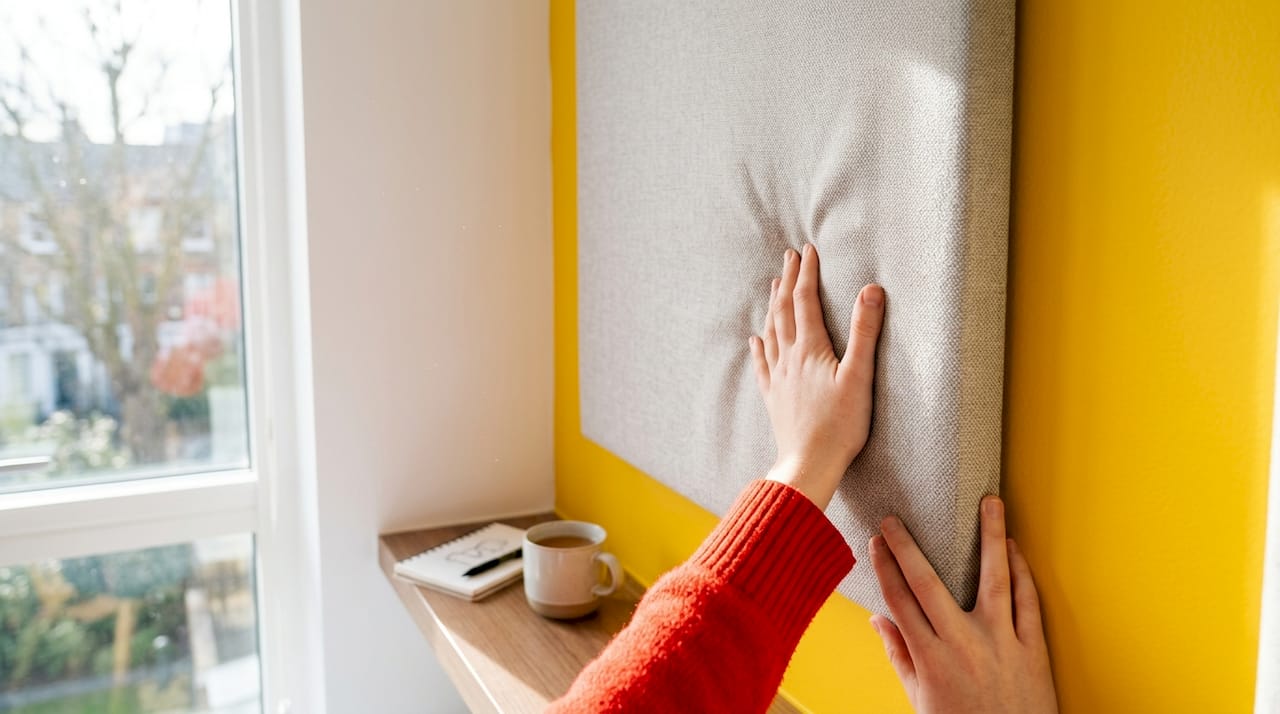
These are the workhorses of residential acoustic treatment. A rigid substrate, usually mineral wool or acoustic foam, is wrapped in fabric and mounted to the wall. They are available in almost any colour or fabric, which makes them genuinely versatile design elements. A living room with four large fabric panels across one wall can reduce reverberation time meaningfully while looking like a considered interior decision. The fabric acts as a permeable membrane, letting sound pass through to the absorbent core beneath.
PET felt acoustic panels
Made from recycled polyethylene terephthalate fibres, these slim panels are worth knowing about. PET felt panels reach NRC values up to 0.80 and come in thicknesses from 3 mm to 12 mm, making them the thinnest viable absorber option for spaces where every centimetre counts. They are available in glue-on or suspended installations and carry fire-retardant treatment as standard. Their clean, slightly industrial aesthetic suits Scandinavian, minimalist, and contemporary interiors, which describes the majority of new Singapore BTO and condominium renovations today. Explore wall panels and renovation options at Tspacemall if PET felt appeals to you as a starting point.
Wood slat and perforated panels
If PET felt is too industrial for your taste, slatted wood panels with an absorptive backing offer warmth and sophistication without sacrificing function. The wood itself is reflective, but sound passes through the gaps between slats and into the mineral wool or felt backing behind. The result is a panel that controls echo while maintaining a natural, residential character. Perforated wood panels work on the same principle, with tiny holes replacing the slats. Both options suit timber-heavy, Japanese-influenced, and resort-style interiors that are popular across Singapore’s newer developments.
Acoustic ceiling panels and clouds
The ceiling is the largest single reflective surface in most rooms, and it is almost always left untreated. Suspended felt clouds and wood-slat ceiling panels reduce echo efficiently without consuming wall space, which makes them the natural first choice for open-plan living areas or rooms with polished concrete floors. A ceiling cloud positioned above a dining table or sofa cluster can transform the acoustic feel of an entire space within a single installation. For those in echo-prone open layouts, explore ideas for acoustic treatments in open interiors that also address visual scale.
Hybrid diffuser panels
Standard absorbers remove sound energy from a room. That is useful up to a point, but over-treating a space makes it feel lifeless and uncomfortable. Hybrid diffuser panels combine broadband absorption with a diffuser face to scatter reflections rather than simply killing them. The result is a room that feels clear and controlled without that flat, deadened quality. These panels suit home music rooms, listening rooms, and any space where the natural liveliness of sound is part of the experience.
Integrated acoustic millwork
This is one of the most underused approaches in Singapore residential design. Cabinetry with open shelving, slatted joinery panels, and perforated MDF built into wardrobes or room dividers all contribute to sound absorption without announcing themselves as acoustic products. A bookshelf wall filled with objects of varying depth and size acts as a natural diffuser. An interior designer who understands acoustics can spec these elements at the drawing stage so that the acoustic function is invisible.
Pro Tip: Ask your interior designer to incorporate open shelving, angled surfaces, or slatted joinery into your millwork brief. These features add acoustic value without any dedicated acoustic budget.
Comparing acoustic solutions: performance, aesthetics, and suitability
| Solution type | NRC range | Best frequency | Thickness | Room suitability |
|---|---|---|---|---|
| Fabric-wrapped panels | 0.70 to 0.95 | Mid and high | 50 to 100 mm | Living rooms, home offices |
| PET felt panels | 0.65 to 0.80 | Mid and high | 3 to 12 mm | All rooms, especially compact spaces |
| Wood slat panels | 0.50 to 0.75 | Mid and high | 18 to 30 mm | Living rooms, bedrooms |
| Ceiling clouds | 0.70 to 0.90 | Mid and high | 20 to 50 mm | Open-plan areas, dining rooms |
| Hybrid diffusers | 0.40 to 0.65 | Low to mid | 60 to 120 mm | Media rooms, music spaces |
| Bass traps | 0.80+ at low Hz | Low frequency | 100 to 300 mm | Corners of home theatres |
A few things stand out from this comparison. Relying solely on NRC risks overlooking bass performance, which matters most in home theatre and media room setups. Thin PET and wood slat panels perform reliably at speech and music frequencies but will not address the low-frequency room modes that make bass sound boomy or uneven.
For most Singapore living rooms, the combination of ceiling clouds plus wall-mounted PET felt or fabric panels covers the vast majority of acoustic complaints. Home theatre setups need a layered approach: decorative panels for the mid and high frequencies, combined with corner-placed bass traps for low-end control. Layered systems combining 25 mm felt with 20 mm dense foam deliver 8 to 20 dB of mid-frequency noise reduction, which represents a dramatic, audible improvement in small rooms.
Cost is also worth considering honestly. Slatted panels cost approximately $3 per square foot for materials at the entry level, while custom fabric-wrapped panels and hybrid diffusers sit at a higher price point. For budget-conscious homeowners, PET felt glued directly to a wall section offers the best performance-to-cost ratio without requiring professional installation.
How to choose the right acoustic solution for your Singapore home
Getting this right is less about finding one perfect product and more about working through a clear sequence of decisions.
-
Identify your actual problem. Is it echo and reverb inside the room, or is it noise from outside or adjacent rooms? Echo calls for absorbers. External noise calls for isolation measures first, such as sealing gaps and upgrading door seals.
-
Seal gaps and weak points before buying panels. A 1% gap in a wall or door can leak 30% of sound, and a 5% gap leaks up to 90%. No panel on the wall will compensate for an unsealed door gap. This step costs almost nothing and protects every investment that follows.
-
Start with the ceiling in open-plan spaces. Ceiling treatments deliver the fastest perceptible improvement in rooms with hard floors and high ceilings. A ceiling cloud above your main seating area is often the single most effective first move.
-
Match your panel choice to your interior style. Timber-heavy homes suit wood slat panels. Minimalist or contemporary spaces suit PET felt. Bold interiors can use fabric-wrapped panels as a genuine design feature rather than an acoustic afterthought.
-
Layer solutions for serious home theatre needs. Decorative wall panels handle dialogue and music clarity. Bass traps in room corners handle the low-frequency buildup that makes action sequences feel oppressive. Both are needed for a well-tuned media room.
-
Consider maintenance before you commit. Fabric panels collect dust and may need vacuuming every few months. PET felt and sealed wood panels are far easier to maintain in Singapore’s humid environment, where mould resistance matters.
Pro Tip: In Singapore’s humidity, always check that your chosen acoustic panel material carries mould-resistant or moisture-stable certification. PET felt and treated timber slats handle humidity better than untreated foam.
My experience integrating acoustics into Singapore homes
I’ve seen this mistake more times than I can count. A homeowner invests in a set of acoustic panels for their living room, mounts them on one wall, and then wonders why the room still sounds echoey. The issue is almost never the product. It’s the placement and the approach.
What I’ve learned is that acoustics in Singapore homes requires thinking in three dimensions. Walls get all the attention, but the ceiling and floor do most of the acoustic heavy lifting. A rug, a sofa with upholstered cushions, and a single ceiling cloud will outperform four bare wall panels every time.
There’s also a persistent confusion between acoustic treatment and soundproofing that I find leads to expensive disappointment. Panels will not stop your neighbour’s music from coming through the wall. They will make your own room sound dramatically better. Those are genuinely different outcomes, and understanding that distinction before you spend money saves a great deal of frustration.
The other thing I’d encourage you not to overlook is integrated millwork. Asking your interior designer to add slats, open shelving, or angled surfaces at the design stage costs very little extra and delivers acoustic benefits without ever needing a dedicated acoustic product. The best acoustic rooms I’ve seen in Singapore homes are the ones where no single element announces itself as acoustic treatment at all.
— Jonathan
Explore acoustic and interior design expertise at Tspacemall
If you are ready to move from research to reality, the experts at Tspacemall can help you find the right solution for your home.

Tspacemall’s curated directory of interior design professionals in Singapore includes specialists in acoustic integration, bespoke millwork, and home renovation. Whether you need a full design plan that incorporates ceiling clouds and slatted panels, or simply want to explore materials with someone who understands both aesthetics and acoustics, the right professional is available through the platform. Browse the Absolook Interior Design listing for design-led acoustic solutions, or explore home and living renovation specialists for a broader view of what Singapore’s best designers can deliver. For homes that prioritise timber and natural materials, Woodcraft Interior Design offers specialists in exactly the aesthetic acoustic integration described in this guide. Your quieter, more comfortable home is one conversation away.
FAQ
What is the difference between acoustic treatment and soundproofing?
Acoustic treatment improves sound quality inside a room by reducing echo and reverberation. Soundproofing reduces noise transfer between rooms or from outside, requiring mass and sealing rather than absorptive panels.
Which acoustic panels work best in a Singapore living room?
Ceiling clouds combined with PET felt or fabric-wrapped wall panels deliver the most noticeable improvement in echo-prone living rooms. Starting with the ceiling gives the fastest results in open-plan spaces with hard flooring.
Do NRC ratings tell the full story about acoustic panels?
No. NRC measures absorption at mid-frequencies only and omits low-frequency performance at 125 Hz. For home theatre or music rooms, always request full octave-band data to assess true bass absorption.
How much do acoustic panels cost in Singapore?
Entry-level slatted panels start at approximately $3 per square foot for materials. PET felt panels are similarly affordable, while custom fabric-wrapped or hybrid diffuser panels sit at a higher price point depending on size and finish.
Can I improve room acoustics without visible panels?
Yes. Integrated millwork with open shelving, slatted joinery, upholstered furniture, and area rugs all contribute to acoustic absorption. Sealing door and window gaps also delivers significant improvement before any panel is installed.
Recommended


