
Discover the Japandi design style explained: a beautiful fusion of Japanese and Scandinavian aesthetics for calm, inviting interiors.


Few design movements have captured the imagination of homeowners quite like Japandi. Searches for the style grew by over 4,000% between 2019 and 2023, outpacing both Scandi and minimalist interiors combined. Yet most people still mistake it for plain minimalism with wooden furniture. The Japandi design style explained properly is something richer: a fusion of Japanese restraint and Scandinavian warmth that produces spaces which feel genuinely calm, lived-in, and quietly beautiful. This guide covers the philosophy, the materials, the lighting, and the practical steps to get it right.
Table of Contents
- Key takeaways
- The philosophy behind Japandi style
- Materials and colour palette in Japandi interiors
- Lighting and furniture for a Japandi space
- How to achieve Japandi style at home
- My honest take on Japandi
- Bring Japandi home with Tspacemall
- FAQ
Key takeaways
| Point | Details |
|---|---|
| Japandi blends two cultures | It fuses Japanese wabi-sabi philosophy with Scandinavian hygge to create warm, restrained interiors. |
| Material quality is non-negotiable | Solid wood, linen, and ceramic are central; veneers and synthetic finishes undermine the entire aesthetic. |
| Lighting sets the mood | Layer three to four warm light sources at 2700K to 3000K and always use dimmers. |
| Palette follows the material | Muted beige, cream, sage, and grey tones should emerge from material choices, not paint alone. |
| Edit with intention | Remove anything that does not serve daily use or provide quiet visual joy before adding anything new. |
The philosophy behind Japandi style
Understanding Japandi interior design properly means understanding the two philosophical traditions it draws from. These are not just visual references. They are ways of relating to the home as a living, breathing space.
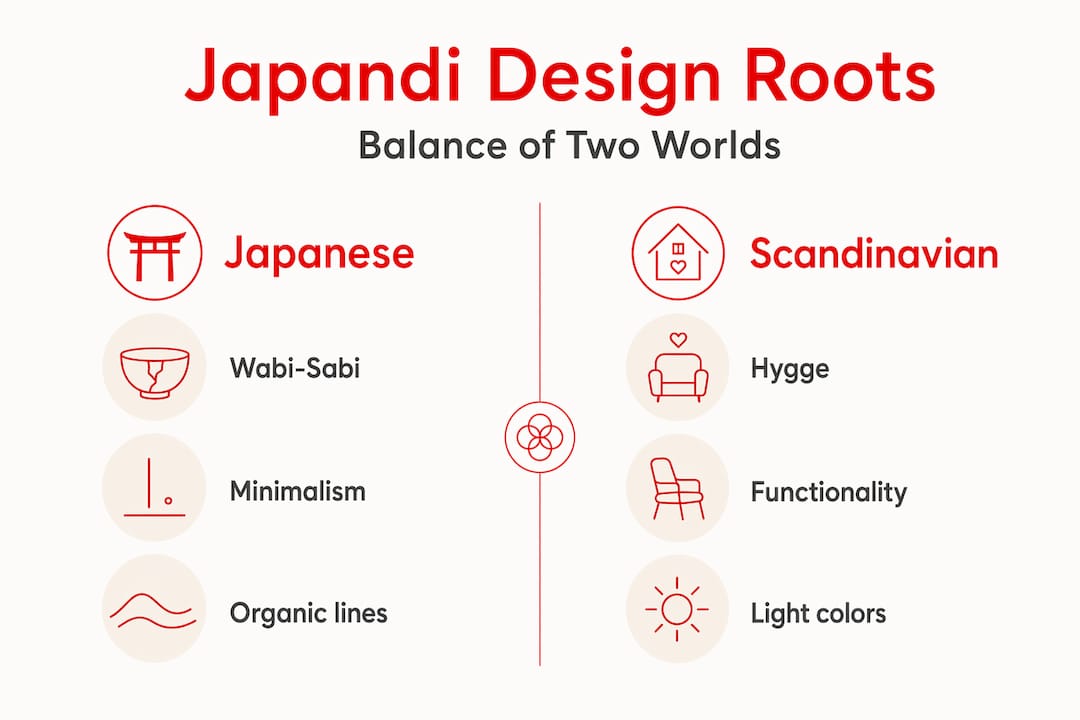
The Japanese contribution centres on two ideas. The first is wabi-sabi, which is not merely a style but a mindset that accepts imperfection, transience, and honest signs of wear as integral to the soul of a home. A ceramic bowl with an uneven glaze, a timber shelf that shows its grain, a linen cushion softened by use: these are not flaws in a wabi-sabi interior. They are the point. The second idea is ma, which translates roughly as negative space. Ma is the deliberate emptiness between objects, the pause that gives each piece room to breathe and be seen clearly.
The Scandinavian contribution is hygge (pronounced “hoo-gah”), the Danish and Norwegian concept of cosiness, togetherness, and the particular comfort of a warm room on a cold evening. Hygge is why Scandi interiors feel welcoming rather than austere, and it is the quality that stops Japandi from tipping into cold, clinical minimalism.
“Japandi is the ‘productive tension’ between Japanese restraint and Scandinavian hygge, aiming to create spaces comfortable to inhabit, not just visually perfect.”
What makes Japandi distinct from either parent style is precisely this tension. Pure Japanese design can feel too spare for Western living. Pure Scandi can feel too bright and pattern-heavy for those drawn to quieter interiors. Japandi sits at the intersection: disciplined but warm, simple but tactile. Historically, the two traditions share more than you might expect. Both prioritise craftsmanship, natural materials, and the relationship between the indoors and the natural world. Japandi simply makes that common ground explicit.
Materials and colour palette in Japandi interiors
If the philosophy is the soul of Japandi, the materials are its body. And this is where most attempts at the style fall apart.
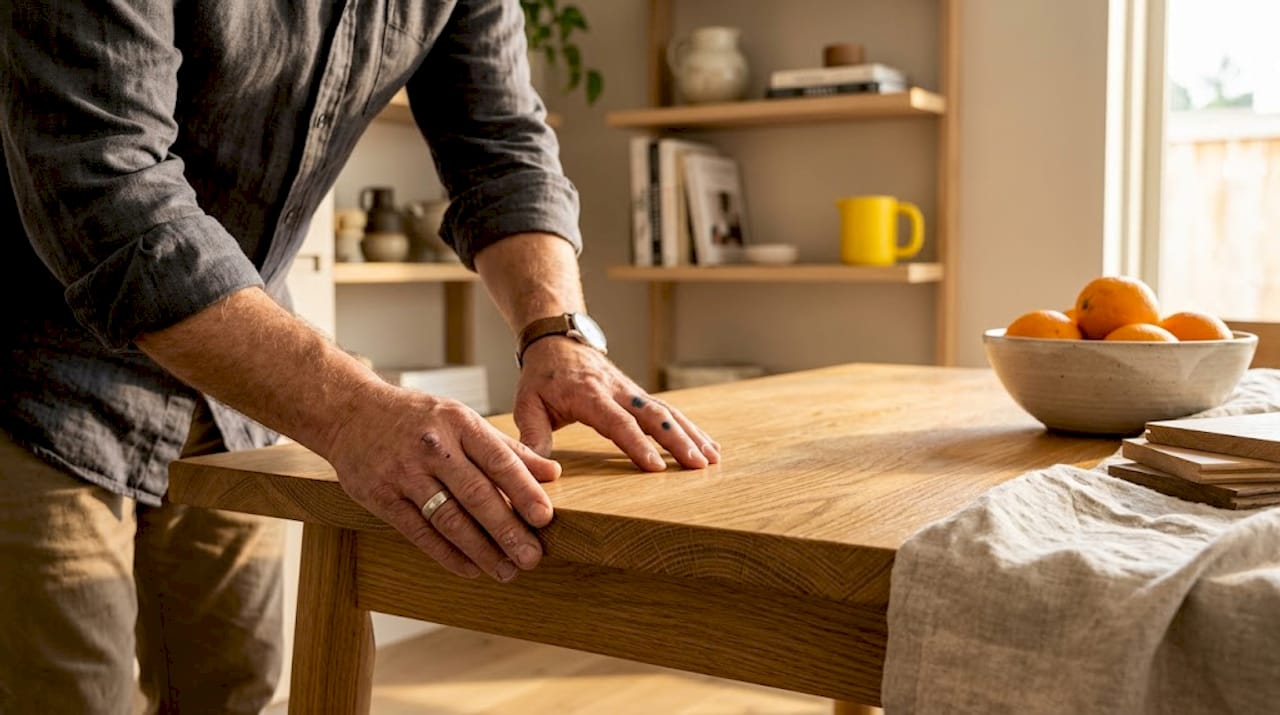
Authentic Japandi demands solid wood, particularly white oak and pale ash, avoiding veneers entirely. Veneers lack the tactile depth and the ageing qualities that give Japandi furniture its character over time. A veneer coffee table will look flat and unconvincing next to a linen sofa. A solid oak table will deepen in colour, show small marks of daily life, and become more beautiful for it. Beyond timber, the material palette includes natural linen, cotton, wool, unglazed ceramic, and stone. These are surfaces that invite touch and reward close attention.
Comparing authentic and inauthentic material choices
| Authentic Japandi materials | Materials to avoid |
|---|---|
| Solid white oak or ash timber | MDF with wood veneer finish |
| Unglazed or hand-thrown ceramic | Mass-produced glossy ceramics |
| Linen, wool, and undyed cotton | Polyester or synthetic upholstery |
| Natural stone (slate, limestone) | Polished marble-effect laminate |
| Rattan and handwoven textures | Plastic weave or resin imitations |
The Japandi colour palette is built from beige, sand, cream, grey, sage green, and warm brown, with deliberate black accents used sparingly for depth. What sets this apart from simply choosing neutral paint colours is the source of those tones. In a well-executed Japandi space, the palette emerges from the materials themselves: the honey of oak, the cool grey of stone, the warm off-white of undyed linen. The walls and soft furnishings then echo those tones rather than compete with them.
Black appears in Japandi as a grounding element. Think slender black steel lamp bases, a black ceramic vase, or black-framed windows. Used in small doses, it adds definition without disrupting the overall calm.
Pro Tip: Before choosing wall paint, bring your key material samples into the room and observe them in natural light at different times of day. Let those tones guide your paint selection rather than choosing a colour first and hoping the materials will follow.
Lighting and furniture for a Japandi space
Lighting is where many otherwise well-intentioned Japandi rooms fail completely. A single overhead ceiling light is, as the experts put it, the enemy of Japandi atmosphere. Overhead light flattens a room, casts unflattering shadows, and creates the kind of harsh, institutional brightness that is the opposite of hygge.
The correct approach is to layer multiple light sources low in the room, mimicking the quality of filtered natural light. Professional guidance recommends three to four warm light sources per living area, operating at colour temperatures between 2700K and 3000K. That range produces the amber, candlelit warmth that makes a room feel genuinely restful.
Here is a practical lighting plan for a Japandi living room:
- A floor lamp with a warm bulb, positioned beside the sofa or reading chair. A washi paper shade or a simple linen drum shade works well.
- A table lamp on a sideboard or console, providing a secondary pool of light that draws the eye across the room.
- Candles or a low candleholder cluster on the coffee table. These are not decorative afterthoughts in Japandi. They are a legitimate light source.
- A pendant light hung low over a dining or coffee table, chosen for its material quality rather than its visual drama. Rattan, washi paper, or hand-blown glass are all appropriate.
Every circuit should be on a dimmer. The ability to shift ambiance from bright afternoon light to a soft evening glow is not a luxury in Japandi. It is a requirement.
Furniture follows a clear logic. Pieces should sit low to the ground, reflecting the Japanese tradition of grounded living. Lines should be clean and undecorated. Upholstery should be in natural fabrics: linen, wool, or undyed cotton. A well-executed Japandi living room typically features a low sofa in natural linen, a solid oak coffee table, layered rugs in complementary tones, and minimal curated decor. Nothing competes for attention. Everything earns its place.
Pro Tip: When shopping for Japandi furniture, turn the piece over and look at the underside. Solid wood will show grain and natural variation throughout. Veneer will reveal a uniform, flat substrate beneath a thin decorative layer. This single check will save you from the most common material mistake in Japandi interiors.
How to achieve Japandi style at home
Knowing the principles is one thing. Applying them to a real home, with existing furniture, fixed architecture, and a real budget, is another. These steps will get you there without starting from scratch.
Start by editing, not adding. Before purchasing a single new item, walk through each room and remove everything that does not serve a daily function or provide genuine quiet pleasure. Japandi demands intentional restraint: disciplined editing of visible items to only those that serve daily use or provide quiet visual joy. This is harder than it sounds. Most rooms contain at least 40% more objects than a Japandi space can absorb.
Layer textures within a narrow tone range. The common mistake is to confuse Japandi with adding more colours in earthy shades. The actual technique is to keep tones very close together and vary the texture instead. A cream linen cushion, a warm wool throw, a woven rattan tray, and a smooth ceramic bowl can all occupy the same coffee table without visual conflict, because they share a tonal family while offering completely different surfaces to the eye and hand.
Choose artisanal objects over decorative props. Every object in a Japandi space should show considered craftsmanship and, ideally, embrace imperfection. A hand-thrown pot with an uneven rim is more at home here than a perfect factory piece. Studios producing handcrafted ceramics, woven textiles, and solid wood objects are the right source. Retailers at a studio like Finest Furniture Studio that specialise in handcrafted, authentic pieces are worth exploring for furniture that genuinely ages well.
Avoid the styling trap. One of the most common errors is treating Japandi as a photoshoot aesthetic rather than a way of living. Buying a stack of artfully placed books, a dried pampas grass stem, and a linen throw does not create Japandi. It creates a set. Authentic Japandi interiors look the way they do because the objects in them are actually used and genuinely loved.
Be patient and buy slowly. Japandi interiors built over time, piece by piece, always look more convincing than rooms assembled in a single shopping weekend. Each addition should feel considered. If you are uncertain about a piece, that uncertainty is usually the right answer.
My honest take on Japandi
I have spent a good deal of time in homes that call themselves Japandi, and the ones that actually work share one quality: the owners bought less than they wanted to. Every genuinely successful Japandi interior I have encountered was the result of restraint applied not just to the decor but to the shopping impulse itself.
What I find most compelling about this style is that it takes wellbeing seriously. By reducing visual noise, it gives the nervous system somewhere to rest. Wabi-sabi, understood as a profound design philosophy rather than a trend label, genuinely changes how you relate to your possessions. You stop wanting more things and start wanting better ones.
My practical advice is this: spend more on one solid timber piece than you think is reasonable, and spend nothing on five cheap alternatives. The quality difference will shape the entire room. And if a space feels too sparse as you build it, sit with that feeling for a month before adding anything. More often than not, the sparseness was correct all along.
— Jonathan
Bring Japandi home with Tspacemall

If you are ready to move from inspiration to action, Tspacemall is where East Singapore homeowners find everything they need in one place. The interior design and renovation specialists at T-Space Mall work with homeowners to translate Japandi principles into real floor plans, material specifications, and finished spaces that genuinely reflect the style. For those seeking a dedicated design partner, Absolook Interior Design at T-Space Mall brings particular expertise in minimalist and Japandi aesthetics, from initial concept through to final installation. T-Space also houses flooring specialists and wall panel suppliers whose premium natural materials align directly with Japandi’s material requirements. Whether you are renovating a full flat or refining a single room, the team at Tspacemall can help you build a space that feels as good as it looks.
FAQ
What is Japandi style in simple terms?
Japandi is a hybrid interior design style that blends Japanese wabi-sabi philosophy with Scandinavian hygge, producing spaces that are calm, warm, and uncluttered. It sits between cold minimalism and cosy Scandi interiors.
How does Japandi differ from Scandi design?
Scandi design tends towards brighter colours, more pattern, and a lighter overall mood, while Japandi is darker in tone, more restrained in decor, and shaped by the Japanese principle of intentional negative space.
What colours work in a Japandi colour palette?
The core palette includes beige, cream, sand, grey, sage green, and warm brown, with black used sparingly as an accent. Tones should emerge from natural material choices rather than being imposed through paint alone.
What furniture suits a Japandi interior?
Japandi style furniture is low-profile, clean-lined, and made from solid natural materials such as white oak or ash. Upholstery should be in linen, wool, or undyed cotton, avoiding synthetic fabrics and glossy finishes.
How many light sources does a Japandi room need?
A Japandi living space works best with three to four distinct warm light sources at 2700K to 3000K, positioned low in the room rather than overhead, with dimmers to adjust the mood from day to evening.
Recommended


