
Discover the best home décor styles for small spaces in our 2026 guide. Transform your compact home into a stylish, functional haven!


Home décor styles for small spaces are design approaches that maximise the function and perceived size of compact urban homes through deliberate use of scale, lighting, furniture, and colour. Whether you are settling into your first BTO flat or decorating a studio apartment in the city, the right interior style transforms a tight floor plan into a space that feels genuinely liveable. Principles drawn from Japandi design, warm minimalism, and Scandinavian simplicity all prove that square footage is far less limiting than most new homeowners assume. The key lies in knowing which techniques to apply and in what order.
What makes a home décor style ideal for small spaces?
The best home décor styles for small spaces share three foundational qualities: they create visual breathing room, they respect proportion and scale, and they treat vertical space as prime real estate. Understanding these qualities before choosing a style saves you from costly mistakes and redesigns later.
Visual breathing room is not about owning less. It is about placing what you own with intention. Proportion and scale are critical to making small spaces feel airy rather than cramped, which means a single well-sized sofa often works better than two undersized chairs that fragment the room.
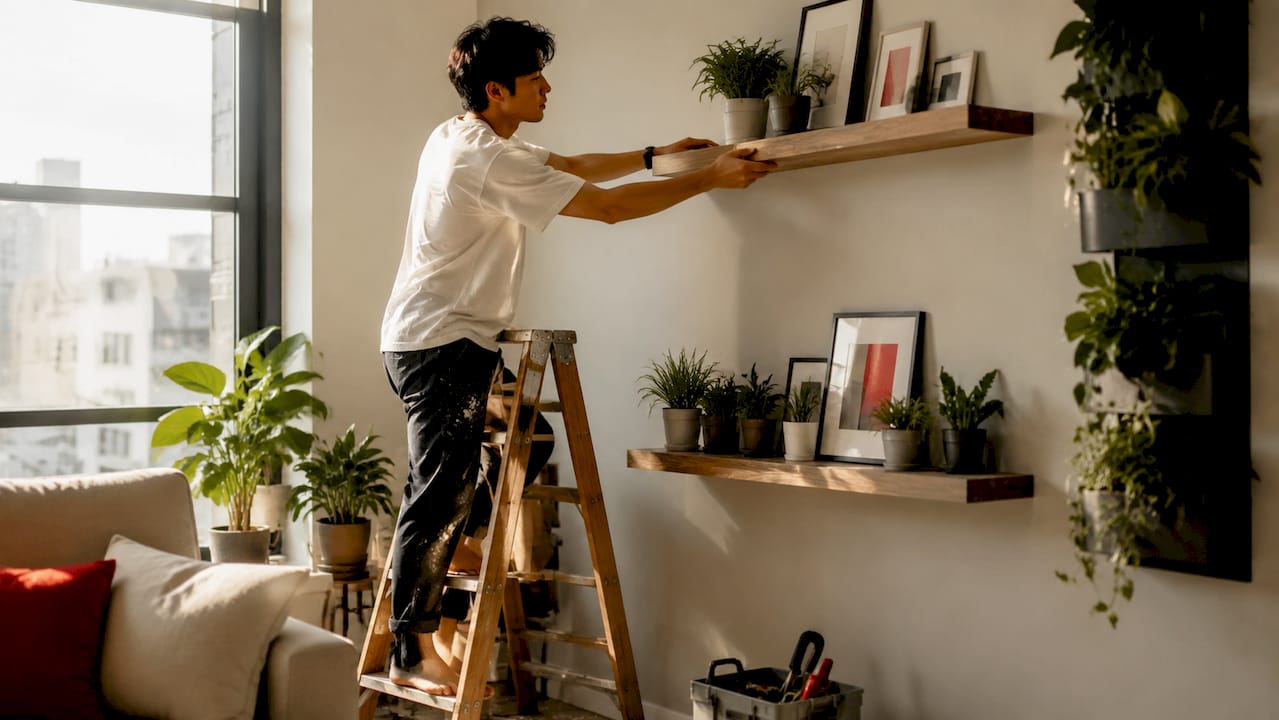
Vertical thinking is one of the most underused tools in small space interior design. Vertical décor strategies such as ceiling-height curtains and upper-wall shelving draw the eye upward and create the illusion of taller rooms. In very compact interiors, distributing heavier visual elements higher in the room prevents the lower two-thirds from becoming a visual bottleneck.
Colour strategy matters enormously. The 60-30-10 colour rule distributes dominant, secondary, and accent colours to make rooms feel intentional and calm rather than chaotic. Warm neutrals such as sand, clay, and soft taupe tend to perform better than stark cool whites, which can feel clinical in compact rooms.
Layered lighting is the finishing layer that most beginners overlook. Ambient, task, and accent sources at a warm 2700 to 3000K colour temperature soften small spaces and offer flexible moods throughout the day. Dimmer switches amplify this effect considerably.
Pro Tip: Place a large mirror of at least 80 by 120 centimetres directly opposite your main window. A well-positioned mirror reflects light rather than clutter, boosting both natural brightness and perceived depth. The angle matters: check what the mirror reflects at different times of day before fixing it permanently.
1. Japandi style
Japandi is the most consistently effective style for decorating tiny apartments because it combines Japanese minimalism with Scandinavian warmth. Low-profile furniture, natural earthy colours, and negative space make small apartments feel spacious and calm without stripping them of personality. Materials like linen, wood, ceramic, and rattan add tactile warmth while keeping the visual palette restrained. Tspacemall’s guide to Japandi design principles explains how to apply this style to local flat layouts with practical material choices.
2. Warm minimalism
Warm minimalism differs from cold, gallery-style minimalism in one important way: texture. Where stark minimalism can feel sterile in a small room, warm minimalism uses linen cushions, woven baskets, and timber accents to create a lived-in feel without accumulating clutter. The rule is to limit decorative objects to three per surface and choose each piece for both visual and functional value. This approach suits first-time homeowners who want a clean aesthetic but do not want their home to feel like a showroom.
3. Scandinavian-inspired simplicity
Scandinavian design prioritises bright, functional spaces filled with natural materials and honest craftsmanship. For small homes, its strength lies in furniture that does one job exceptionally well rather than attempting to fill every role. Pale birch wood, white-washed surfaces, and simple geometric textiles keep rooms feeling open. The style also embraces natural light as a design element, making it particularly well suited to rooms with good window access.
4. Modern industrial adaptations
Industrial style in a small space works only when it is edited carefully. Full industrial design, with its heavy concrete surfaces and oversized metal shelving, overwhelms compact rooms. The adapted version uses slim powder-coated steel frames, exposed brick on a single accent wall, and pendant lighting with Edison-style bulbs to suggest the aesthetic without the visual weight. Zoned lighting is especially important here: a single overhead fixture flattens an industrial-style room, while layered sources create depth and definition.
5. Multi-functional contemporary
This style is built entirely around the realities of compact living. Built-in beds connected to functional zones reduce clutter and fragmentation by unifying sleeping, seating, and storage into a single coherent unit. Custom built-ins are the headline feature, but the style also incorporates fold-flat desks, storage ottomans, and wall-mounted shelving to reclaim floor space. For bedroom furniture styles in small spaces, this approach delivers the highest return on investment because every piece earns its footprint.
Pro Tip: When choosing a storage ottoman, measure the clearance between it and surrounding furniture before purchasing. An ottoman that cannot open fully becomes dead storage, which defeats its purpose entirely.
6. Vintage-modern blend
Mixing scaled vintage pieces with streamlined modern forms creates a layered, characterful space without the visual heaviness of a fully vintage room. The key word is scaled: a vintage armchair with a slim profile works beautifully in a small living room, while a large Victorian chesterfield does not. One or two vintage anchor pieces alongside contemporary low-profile furniture give a room personality and prevent the sterile quality that sometimes affects purely modern interiors.
7. Biophilic minimalism
Biophilic design brings natural elements indoors, and in small spaces it works best when kept restrained. Two or three well-chosen plants, a timber feature shelf, and natural stone accessories introduce organic texture without crowding surfaces. Snake plants and pothos are practical choices for compact rooms because they thrive in indirect light and require minimal maintenance. The visual effect is a space that feels alive and refreshed without the clutter of an overstuffed indoor garden.
How to use furniture, lighting, and accessories effectively
Choosing the right pieces is only half the work. Arrangement and layering determine whether a small room feels considered or chaotic. A practical furnishing sequence for new homeowners is to establish functional zones first using foundational furniture and lighting, then add accessories last to avoid circulation issues and premature clutter.
Key principles for furniture selection and placement:
- Choose storage beds and mounted lighting to free surface space in bedrooms. Ottoman-style beds with integrated storage and wall-mounted bedside lamps reduce clutter and improve function simultaneously.
- Avoid furniture that is too small for the room. Undersized pieces make a room feel more fragmented, not larger.
- Use rugs to define zones without blocking light flow. A rug anchors a seating area and signals spatial separation without the visual weight of a wall or partition.
- Hang curtains at ceiling height, not at window height. This single adjustment adds the illusion of 30 to 40 centimetres of vertical space at no cost.
- Use translucent partition materials such as textured glass panels to define zones while preserving openness and brightness in studio layouts.
| Element | Best choice for small spaces | What to avoid |
|---|---|---|
| Sofa | Low-profile, slim arms, neutral tone | Overstuffed, high-back, dark upholstery |
| Bed frame | Storage base, wall-mounted headboard | Bulky four-poster, oversized footboard |
| Lighting | Layered warm sources, dimmers | Single overhead pendant as sole source |
| Storage | Built-ins, ottomans, under-stair units | Freestanding wardrobes that block sightlines |
| Accessories | Three per surface, dual-purpose objects | Collections, oversized decorative items |
Comparing the best styles for different small space needs
Not every style suits every room type. The table below helps you match a décor approach to your specific situation.
| Style | Best suited for | Key strength | Watch out for |
|---|---|---|---|
| Japandi | Studios, open-plan flats | Calm, cohesive aesthetic | Can feel sparse without texture |
| Warm minimalism | Living rooms, first homes | Approachable and liveable | Requires disciplined editing |
| Scandinavian | Light-filled rooms | Maximises natural light | Feels cold in low-light rooms |
| Multi-functional contemporary | Bedrooms, studio apartments | Highest space efficiency | Custom built-ins require upfront investment |
| Vintage-modern blend | Living rooms, dining areas | Adds character and warmth | Scale errors are costly |
| Biophilic minimalism | Any room with indirect light | Freshness and organic texture | Overplanting creates clutter |
For tiny bedrooms, multi-functional contemporary and Japandi are the strongest performers. Studios benefit most from Japandi or multi-functional contemporary because both styles prioritise zoning and openness without sacrificing warmth. First-time homeowners on a budget often find warm minimalism the most forgiving starting point because it rewards quality over quantity and adapts well as your collection of pieces grows.
Blending styles is entirely valid, provided you maintain a consistent material palette. Combining Japandi’s natural textures with Scandinavian furniture forms, for example, produces a cohesive result because both styles share a commitment to honest materials and restrained colour. The experts at Tspacemall recommend choosing one style as your foundation and borrowing no more than two elements from a second style to avoid visual confusion.
Key takeaways
The most effective home décor styles for small spaces combine vertical thinking, layered lighting, and multifunctional furniture within a disciplined colour palette to make compact rooms feel both spacious and genuinely liveable.
| Point | Details |
|---|---|
| Vertical thinking expands space | Hang curtains at ceiling height and use upper-wall décor to draw the eye upward. |
| Colour structure prevents chaos | Apply the 60-30-10 rule: dominant, secondary, and accent tones in fixed proportions. |
| Lighting layers change perception | Use ambient, task, and accent sources at 2700 to 3000K with dimmers for flexible moods. |
| Furniture scale is non-negotiable | One well-proportioned piece outperforms two undersized ones in any small room. |
| Style blending requires a foundation | Choose one primary style and borrow no more than two elements from a second to maintain cohesion. |
What I have learnt from styling small spaces over the years
The most common mistake I see new homeowners make is treating a small room as a problem to be solved rather than a constraint to be designed within. Those are very different mindsets, and they produce very different results.
The homeowners who end up with spaces they genuinely love are the ones who edit ruthlessly before they decorate. They ask whether each piece earns its place functionally and visually. They invest in one or two quality anchor pieces, such as a solid timber bed frame or a well-made sofa, rather than filling the room with cheaper alternatives that wear out and accumulate. Furniture quality is more visible in small spaces than in large ones because there is nowhere for poor craftsmanship to hide.
I also think people underestimate how much lighting transforms a compact room. A single overhead light is the enemy of atmosphere in a small space. Add a floor lamp in one corner, a warm pendant over the dining area, and a bedside wall light, and the same room feels entirely different after dark. Plants help too, even one or two well-placed specimens. They introduce movement and life that no decorative object can replicate.
My honest advice: start with your zones, build your lighting layers, then add furniture and accessories in that order. Resist the urge to fill every surface. The breathing room you preserve is what makes the space feel larger than it is.
— Jonathan
Let Tspacemall help you bring your small space to life

Styling a compact home is far easier when you have the right professionals alongside you. At Tspacemall, located in the East of Singapore, you will find a curated selection of interior design firms and furniture specialists who understand the realities of small urban living. Whether you need custom built-ins designed around your floor plan or guidance on zoning a studio apartment, the team at Absolook Interior Design offers personalised solutions that balance aesthetics with genuine functionality. For bespoke furniture and efficient layouts, Woodcraft Interior Design brings craftsmanship and spatial thinking together under one roof. Visit Tspacemall to explore every service you need to transform your compact home into a space you are proud of.
FAQ
What is the best décor style for a very small bedroom?
Multi-functional contemporary and Japandi are the strongest choices for compact bedrooms. Both prioritise low-profile furniture, integrated storage, and restrained colour palettes that make the room feel larger and calmer.
How do mirrors help in small space interior design?
A large mirror placed opposite a main window boosts natural light and perceived depth. The mirror should measure at least 80 by 120 centimetres and reflect a calm area of the room rather than a cluttered surface.
Can you mix décor styles in a small home?
Yes, provided you maintain a consistent material palette and choose one style as your foundation. Borrowing no more than two elements from a second style prevents visual confusion and keeps the space feeling cohesive.
What space-saving décor ideas work best in studio apartments?
Built-in beds connected to storage zones, translucent partitions for zoning, ceiling-height curtains, and layered warm lighting are the most effective tools for decorating tiny apartments without sacrificing openness or style.
How do I choose furniture proportions for a small room?
Well-scaled furniture creates an airy, intentional atmosphere. Measure your floor plan carefully and choose pieces that leave clear circulation paths of at least 60 to 90 centimetres between major furniture items.
Recommended


