
Ready to transform your first home? Learn how to hire an interior designer for your first home and navigate the process confidently!


Getting your first home in Singapore right is exhilarating, but the moment you decide to hire an interior designer for your first home, the questions pile up fast. How much should you actually spend? Which designer understands HDB restrictions? What happens if the project runs over time? These are the real worries that keep new homeowners up at night, and they deserve real answers. This guide walks you through every practical step, from setting a realistic budget to managing your renovation timeline, so you can make confident decisions from day one.
Table of Contents
- Key takeaways
- Why you should hire an interior designer for your first home
- Know your budget before you search
- How to research and shortlist designers
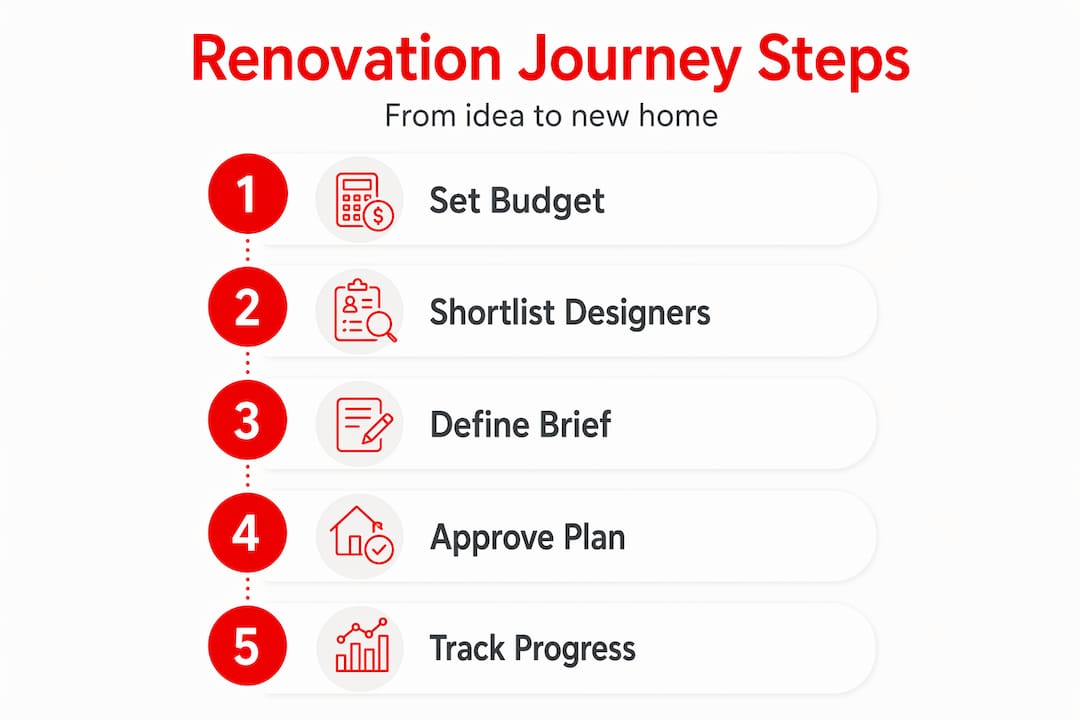
- The hiring and renovation process, step by step
- Managing budget and timeline throughout the renovation
- Common mistakes first-time homeowners make
- My honest take on hiring your first interior designer
- Find your ideal designer at Tspacemall
- FAQ
Key takeaways
| Point | Details |
|---|---|
| Set a hard budget first | Share your actual spending limit with your designer upfront to get feasible design solutions from the start. |
| Interview on process, not just looks | Ask designers how they manage workflows and HDB permits, not only what their portfolio looks like. |
| Understand fee structures fully | Fixed fee models tend to be more transparent than percentage-based fees that can hide procurement markups. |
| Plan for contingency costs | Add 10 to 15 per cent on top of your renovation estimate to cover unexpected expenses and scope changes. |
| Finalise decisions early | Locking in floor plans and electrical layouts before work begins protects your timeline from costly slippage. |
Why you should hire an interior designer for your first home
Many first-time homeowners try to manage renovation decisions alone, only to discover that the volume of choices, suppliers, and regulations is genuinely overwhelming. Singapore’s renovation market is not like browsing a furniture catalogue. You are coordinating flooring specialists, electricians, carpenters, and HDB permit approvals, often simultaneously.
A skilled designer acts as your single point of accountability across all these moving parts. They translate your lifestyle needs into a workable layout, negotiate with contractors, and flag compliance issues before they become costly mistakes. For a first home, where you likely lack prior renovation experience, that expertise is not a luxury. It is practical risk management.
The home and living design sector in Singapore has grown significantly, giving new homeowners access to firms that specialise in everything from compact HDB flats to larger condominium spaces. The challenge is knowing how to choose the right one for your situation.
Know your budget before you search
Before you speak to a single designer, you need a clear picture of what your renovation will realistically cost. HDB renovation costs vary considerably by scope and material quality.
| Renovation tier | Estimated cost range | Typical scope |
|---|---|---|
| Basic | S$25,000 to S$40,000 | Painting, basic flooring, minimal carpentry |
| Mid-range | S$40,000 to S$65,000 | Custom carpentry, feature walls, full kitchen |
| High-end | S$65,000 and above | Full design overhaul, premium finishes throughout |
These figures are starting points, not ceilings. Material upgrades, structural changes, and last-minute additions can push costs up quickly. Always add a contingency buffer of 10 to 15 per cent on top of your base estimate. If you do not use it, consider it a pleasant outcome.
One of the most important decisions you make before renovation begins is defining whether your home is for your own stay or for rental purposes. An own-stay home typically warrants investment in quality and personalisation. A rental property often benefits from neutral, durable choices that appeal broadly. This distinction shapes every design and material decision that follows.
Budget transparency with your designer is not just advisable, it is the difference between a smooth project and a frustrating one. Tell your designer your hard budget: the real maximum you can spend, not an aspirational figure you hope to negotiate down from. Designers who know your true limit can build feasible solutions from the start rather than presenting beautiful concepts you cannot afford.
Pro Tip: If you are nervous about revealing your full budget, consider this: designers who know your real ceiling will prioritise accordingly. Those who do not know will default to mid-to-high options and leave you trimming painfully later.
If you are working with tighter constraints, resources like this guide to styling a home on a budget can help you identify where to invest and where to simplify without sacrificing the feel of your space.
How to research and shortlist designers
Finding the best interior designers for new homes in Singapore starts with knowing where to look and what to prioritise once you find them. Online directories, design firm showrooms, and referrals from friends who have recently renovated are all reliable starting points. Visiting physical showrooms, such as those gathered at Tspacemall in the East of Singapore, gives you a more grounded sense of a firm’s style and quality than online galleries alone.
When reviewing portfolios, look specifically for projects similar in scope and flat type to yours. A designer whose portfolio is full of condominium interiors may lack hands-on experience with HDB-specific carpentry constraints and permit processes.
During initial consultations, resist the temptation to evaluate designers purely on aesthetics. Structured process communication is a far more reliable predictor of project success. A designer who clearly explains their workflow, how they handle revisions, and how they coordinate with contractors will almost always outperform a visually impressive but operationally vague alternative.
Key questions to ask any designer in your first meeting:
- How do you manage communication between yourself, the homeowner, and contractors?
- What is your process for handling HDB permit applications?
- How do you handle scope changes or budget adjustments during the project?
- Can you provide references from clients with similar flat types?
- What does your fee structure include, and are there any additional procurement markups?
Speaking of fees, designer fees in Singapore typically follow three models. Percentage-based fees run from 3 to 5 per cent for junior designers and 7 to 10 per cent for senior practitioners. Fixed fees for a four-room HDB flat are approximately S$5,000. Hourly consultation rates range from S$150 to S$500 per hour.
The percentage model sounds simple but can obscure costs. When a designer earns more as the project budget grows, there is an inherent tension in keeping costs lean. Fixed fee models are generally more transparent, reducing the risk of procurement markups hidden within low headline rates.
Pro Tip: Ask each designer directly whether their fee includes procurement of materials and furniture, or whether they charge a separate markup on top. This single question often reveals more about a firm’s approach than any portfolio review.
Understanding what a client brief involves before your first consultation will help you enter the process prepared and get far more out of that initial conversation.
The hiring and renovation process, step by step
Once you have selected your designer, the collaboration follows a recognisable sequence. Knowing what each phase involves will help you avoid the delays that trap many first-time homeowners.
- Client brief and concept development. You share your lifestyle needs, aesthetic preferences, and hard budget. Your designer develops initial concepts and space planning options.
- 3D visualisation and material selection. The designer presents spatial layouts with rendered visuals, allowing you to see how colour schemes, furniture placement, and finishes interact before anything is built.
- Permit applications. For HDB renovations, your designer or contractor submits the necessary applications to HDB. Permit approvals typically take 7 to 14 working days but can stretch to four weeks depending on the scope of structural work involved.
- Demolition and hacking. The first physical phase. Wall hacking, tile removal, and structural changes happen here.
- Carpentry and installation. The longest individual phase, typically running 3 to 6 weeks. Custom cabinetry, built-in wardrobes, and kitchen units are fabricated and installed.
- Finishing and handover. Painting, electrical fixtures, and soft furnishings are completed. A final walkthrough with your designer identifies any rectification work before you accept the space.
A full HDB renovation typically spans 8 to 14 weeks from permit approval to handover. This timeline assumes smooth decision-making throughout. Late changes to floor plans or electrical layouts, even small ones, can cascade into multi-week delays.
Common pitfalls to avoid during the renovation process:
- Changing key design decisions after carpentry has begun
- Selecting materials or finishes too late, creating supply gaps
- Underestimating how long permits and approvals actually take
- Assuming verbal agreements with contractors are sufficient without written documentation
Pro Tip: Lock in your floor plan, electrical layout, and major carpentry specifications before any physical work begins. These are the decisions that, once delayed, affect every subsequent phase. Treat them as your renovation’s non-negotiable foundation.
Managing budget and timeline throughout the renovation
One thing many first-time homeowners underestimate is how much Singapore’s regulatory environment shapes the pace of renovation. HDB work hour restrictions prohibit noisy work after 6 PM on weekdays and ban it entirely on Sundays. Designers with genuine HDB experience build these constraints into their project schedules from the outset rather than discovering them mid-project.
| Challenge | What to do |
|---|---|
| Unexpected cost increases | Request written confirmation before approving any change in scope or materials. |
| Timeline slippage from late decisions | Pre-schedule decision milestones with your designer at the project start. |
| Miscommunication with contractors | Confirm that your designer attends key site meetings, not just check-in calls. |
| Hidden procurement costs | Clarify upfront whether material procurement is included in the agreed fee. |
Budget drift is real, and it often comes not from dishonesty but from unclear scope. Every time you request something additional, from a new feature wall to a changed tile selection, document the cost impact in writing before work proceeds. This single habit prevents the majority of end-of-project financial surprises.

Integrated design and renovation firms tend to handle timeline management more effectively than separately hired designers and contractors. When the design and build team communicate within one organisation, handoff delays shrink noticeably.
Pro Tip: Set a personal contingency review at the project midpoint. Check how much of your buffer has been used and whether any decisions are still outstanding that could affect the final cost. Adjust expectations early, not at handover.
Common mistakes first-time homeowners make
Even well-prepared homeowners fall into predictable traps. Recognising them in advance is the most direct form of protection.
Choosing a designer based on the lowest quote is the most common and most costly mistake. Low headline fees often conceal markups on furniture and finishes that dwarf the initial saving. Always compare the total cost of engagement, not just the design fee.
Ignoring a designer’s process in favour of their portfolio is equally risky. A beautiful Instagram feed does not tell you whether that designer returns calls promptly, manages subcontractors effectively, or handles permit applications without prompting. Ask directly. Check references.
Overlooking HDB regulations until late in the project creates expensive rectification work. Wall hacking, wet area tiling, and plumbing changes all require specific approvals. Designers unfamiliar with these rules can inadvertently commit you to non-compliant work that must be undone.
- Verify your designer has active experience with HDB renovations specifically, not just private properties.
- Read your Letter of Appointment carefully before signing to understand exactly what is and is not included.
- Avoid approving work based on verbal assurances. Written sign-offs protect you and your designer equally.
My honest take on hiring your first interior designer
In my experience working with homeowners and renovation professionals, the single issue that derails more first-home projects than any other is the reluctance to talk openly about money. New homeowners are often embarrassed to state their real budget, worried it will lower the designer’s interest or ambition. The opposite is true. Designers who know your actual ceiling design to it, and they design better for it.
I have also seen homeowners spend months comparing portfolios and almost no time assessing how a designer actually communicates. Portfolio quality is easy to recognise. Process quality is not. But process is what protects you when a tile shipment is delayed, when HDB requests additional documentation, or when a contractor finishes a phase two weeks late. Ask your designer how they handled their last major problem on-site. Their answer tells you everything their portfolio cannot.
Singapore’s renovation context adds a layer of complexity that generic hiring advice simply does not address. HDB restrictions around structural changes, noise hours, and permit timelines are not administrative formalities. They are real constraints that experienced local designers absorb into their planning as second nature. Choosing a designer without that specific local knowledge is choosing to discover those constraints yourself, at the worst possible time.
My encouragement to you is this: treat the hiring process with the same care you give to the design itself. The right designer is not just someone whose work looks good. They are someone whose process makes the experience manageable for you.
— Jonathan
Find your ideal designer at Tspacemall

Tspacemall, located in the East of Singapore, brings together a curated selection of interior design firms, renovation contractors, flooring specialists, and home décor brands, all under one roof. For first-time homeowners, this means you can compare firms, review portfolios in person, and speak directly with designers and renovation specialists without the exhausting legwork of tracking them down individually.
Whether you are looking for trusted interior designers for your HDB flat or seeking a firm that handles design and build together, the interior design and renovation directory at Tspacemall connects you with professionals who understand Singapore’s unique renovation environment. Visit the mall, explore the firms listed, or schedule a consultation to begin your first home project with confidence.
FAQ
How much does it cost to hire an interior designer in Singapore?
Designer fees in Singapore typically range from S$5,000 fixed for a four-room HDB flat, or 3 to 10 per cent of the total renovation cost depending on experience level. Hourly consultation rates run from S$150 to S$500 per hour.
How long does a first home HDB renovation usually take?
A full-scale HDB renovation generally takes 8 to 14 weeks from permit approval to handover, with the carpentry phase alone accounting for 3 to 6 weeks. Permit approvals typically add 1 to 4 weeks before physical work begins.
What should I ask a designer during the first consultation?
Ask how they manage HDB permit applications, how they handle scope changes, and whether their fee includes procurement markups. These questions reveal far more about working with them than reviewing their portfolio alone.
Is a fixed fee or percentage fee better for hiring an interior designer?
Fixed fee models are generally more transparent because they do not create a financial incentive to increase project costs. Percentage-based fees can be reasonable but require clear upfront disclosure of any additional procurement charges.
Can I hire an interior designer on a tight budget in Singapore?
Yes. Basic renovation packages starting from S$25,000 are available, and many affordable interior design services offer packages tailored to smaller HDB flat types. Transparent budgeting from the start helps designers create workable solutions within your real spending limit.
Recommended


