
Discover what a smart home system is and how it can enhance your life in 2026. Learn to maximize your home’s potential today!


Most people think a smart home means telling a voice assistant to play music or dimming lights with a phone. That picture is accurate but incomplete. A smart home system is far more than a collection of clever gadgets. Smart home adoption has reached 63% of broadband households in 2026, and many of those homeowners are only scratching the surface of what their systems can do. For families in Singapore, where energy bills bite hard and security matters deeply, understanding what a smart home system truly is could change the way you live at home.
Table of Contents
- Key takeaways
- What is a smart home system, really?
- What devices are in a smart home?
- Benefits of smart home systems
- How a smart home works in practice
- The standards shaping smart homes in 2026
- My honest take after years of smart home work
- Explore smart home solutions at T-Space Mall
- FAQ
Key takeaways
| Point | Details |
|---|---|
| More than gadgets | A smart home system is a coordinated ecosystem of devices, not a loose collection of independent products. |
| The hub is the brain | Choosing a central hub before buying devices prevents fragmented control and costly rework later. |
| Local processing matters | Automations that run locally keep your home functioning even when the internet goes down. |
| Matter 1.3 changes everything | The latest interoperability standard lets devices from different brands communicate without lock-in. |
| Start with a problem, not a product | Identifying your specific pain points, energy waste, security gaps or convenience needs, guides smarter purchasing decisions. |
What is a smart home system, really?
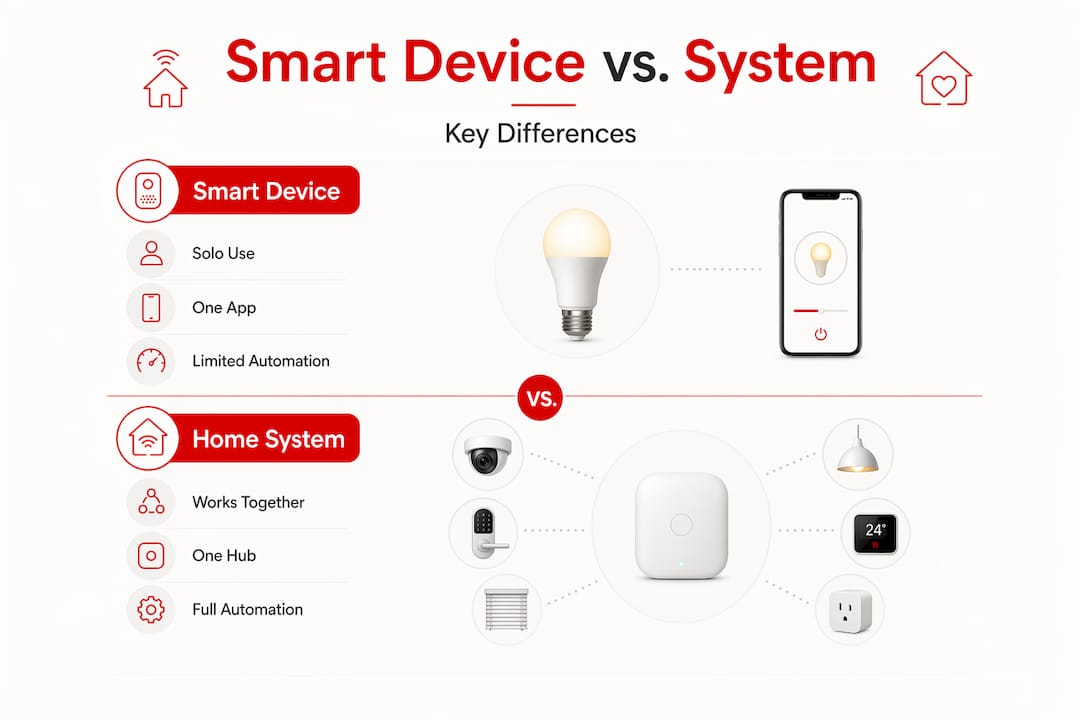
A smart home system is an ecosystem of internet-enabled devices that share information and act together to automate and enhance life at home. The word “ecosystem” is deliberate. Individual smart bulbs or a standalone Wi-Fi camera are smart devices. A smart home system is what happens when those devices talk to each other, respond to conditions, and execute actions you never have to think about manually.
Think of it like the nervous system of a living organism. Each device is a nerve ending, sensing or acting on the world around it. The hub or controller sits at the centre, acting as the brain that interprets signals and decides what to do. Without that brain, the devices are isolated and reactive. With it, your home becomes genuinely intelligent.
Smart hubs normalise communication between devices and run automations locally, which reduces delay and dramatically improves reliability. The layered architecture of a proper smart home system looks like this:
- Broadband network: The foundation. Your router provides the internet connection that cloud-connected devices rely on.
- Communication protocols: The language devices speak. Common ones include Wi-Fi, Zigbee, Z-Wave, and the newer Matter standard.
- Devices: The sensors, switches, locks, cameras, thermostats, and appliances that form the visible layer.
- Hub or controller: The central processor that coordinates all devices, runs automations, and provides a single point of management.
- User interface: Your app, voice assistant, or wall panel. The part you actually touch or speak to.
The critical distinction between a smart device and a smart home system is integration. A smart bulb you control from an app is convenient. A system that dims those bulbs automatically when your television turns on, adjusts the air conditioning to your preferred evening temperature, and locks the front door at bedtime is genuinely transformative.
What devices are in a smart home?
Smart home technology explained at its most practical level comes down to four core device categories. Understanding each one helps you build a system that actually solves problems rather than adding complexity.
Smart lighting is usually where people start. The choice between smart bulbs and smart switches is not trivial. Smart wall switches are technically superior because they keep the circuit live at all times, meaning family members and guests can still use physical switches without disabling the automation. Smart bulbs go dark and lose connectivity the moment someone flicks the wall switch off.
Smart thermostats and HVAC controls are arguably the highest-value devices in Singapore’s tropical climate. They learn your patterns, adjust cooling automatically based on occupancy, and give you precise scheduling so your air conditioning is not running to an empty flat.
Security devices form a protective layer that many families find the most reassuring part of the system. This category covers a lot of ground:
- Smart locks with keypad, fingerprint, or remote access
- IP cameras with motion detection and real-time alerts to your phone
- Door and window sensors that trigger alarms or notifications
- Smart doorbells with two-way audio and video
Smart technology redefines residential safety by giving parents and homeowners visibility and control they simply never had before.
Smart plugs and connected appliances round out the picture. A smart plug turns any ordinary appliance into a scheduled, remotely controlled device. Your rice cooker starts before you arrive home. The washing machine runs during off-peak hours to save on electricity.

Pro Tip: When selecting devices, prioritise compatibility with the Matter standard. Matter 1.3 ensures your devices can communicate across different brands and ecosystems, protecting your investment as the technology evolves.
Benefits of smart home systems
The benefits of smart home systems are most powerful when you treat integration as the goal rather than individual device features. Here is what a well-built system genuinely delivers:
-
Convenience at a whole new level. Coordinated automations mean a single “goodnight” command can lock every door, dim every light, and set the thermostat to your sleeping temperature simultaneously. You are not pressing buttons. Your home is simply responding to how you live.
-
Security that works while you sleep. Smart security systems offer real-time alerts, automatic door locking, and occupancy simulation when you are travelling. A camera that sends a notification to your phone the moment someone approaches your gate gives you a level of awareness that traditional systems cannot match. Smart fencing and gate automation further extends this protective perimeter around your property.
-
Meaningful energy savings. This is where the numbers become hard to ignore. Energy consumption can fall by up to 65% through intelligent automation of HVAC and lighting. For a Singapore household running air conditioning most of the day, that represents a genuinely significant reduction in monthly bills.
-
A positive impact on the environment. Lower energy consumption translates directly to reduced carbon emissions. In a city with ambitious sustainability targets, this is not a minor consideration.
-
Increased property value. 29% of home buyers would pay a premium for a property with integrated smart technology, particularly security systems and smart locks. If you plan to sell or rent your flat in the future, a properly installed smart home system is a credible asset.
The key word across all of these benefits is “integrated.” A single smart bulb will not cut your energy bill. A system that orchestrates your lighting, air conditioning, and appliances based on occupancy and time of day absolutely can.
How a smart home works in practice
Understanding the theory is one thing. Building a system that actually works in your home is another. The experts at Tspacemall have seen countless families start with enthusiasm and stall out after three unconnected apps and a drawer full of devices that do not speak to each other.
Choosing the right hub
The single most important decision you will make is your hub. Choose it before you buy a single device. The hub determines which protocols you can use, which automations are possible, and whether your system can function when the internet is down. Local automation engines are a critical feature because they allow your home to keep functioning during an outage.
Building your system step by step
Start by identifying the specific problem you want to solve. Not “I want a smart home.” Rather, “I want to stop leaving the air conditioning on when I leave for work” or “I want to know immediately if someone opens the gate while I am not home.” That clarity shapes every decision that follows.
- Step 1: Choose a hub that supports the protocols used by devices you want.
- Step 2: Install and connect two or three devices that address your primary problem.
- Step 3: Create one or two automations. Test them thoroughly before adding more.
- Step 4: Expand systematically, adding device categories rather than random products.
Starting with a unified ecosystem avoids “app-hopping,” which is one of the most common reasons families abandon their smart home investment. When every device lives in one app or interface, adoption across the household improves dramatically.
What does it cost?
| System tier | Typical coverage | Approximate cost range |
|---|---|---|
| Entry-level | 3 to 5 devices, single room | S$50 to S$300 |
| Mid-range | Whole flat, core automation | S$800 to S$3,000 |
| Comprehensive | Full home, custom integration | S$5,000 and above |
Entry-level smart devices can cost as little as $10 each, though a meaningful system requires more planning than budget to get right.
Pro Tip: Do not buy devices to solve problems you do not have. A smart home built around your actual lifestyle will always outperform one built around a wishlist.
The standards shaping smart homes in 2026
Smart home technology has historically suffered from fragmentation. A device built for one ecosystem often refused to speak to another, leaving homeowners locked into a single brand’s products.
The Matter 1.3 standard has changed this meaningfully. It enables cross-brand device communication, so a light switch from one manufacturer can respond to an automation rule set on a hub from a completely different company. This is a significant shift in how you think about building a system.
Thread, a companion protocol to Matter, creates low-power mesh networks across your home. Every Thread device acts as a relay point, extending the network’s reach without additional infrastructure. The result is more reliable communication in larger homes or apartments where Wi-Fi signals degrade in distant rooms.
| Protocol | Best use case | Requires hub? |
|---|---|---|
| Wi-Fi | High-bandwidth devices (cameras) | No |
| Zigbee | Low-power sensors and switches | Yes |
| Z-Wave | Reliable mesh, home security | Yes |
| Matter/Thread | Cross-brand, future-proofed devices | Often yes |
Modern hubs now act as bridges, translating between all four of these protocols simultaneously. This means your Zigbee sensors, your Wi-Fi cameras, and your Matter-compatible locks can all live within one coherent system.
My honest take after years of smart home work
I have helped many families set up their smart homes, and the pattern I see most often is the same. Someone buys a voice assistant, adds a few bulbs, then discovers three months later that their “smart home” requires four different apps and a specific sequence of taps to do anything useful.
The mistake is not the devices. It is the order of decisions. I always say: pick your hub first, then pick your devices. The hub is your commitment. Everything else is furniture.
What I have learned is that families who focus on solving real home problems end up with systems they actually use. Families who chase features end up with expensive drawers. The difference between those two outcomes is not budget. It is intention.
Local processing is the feature nobody talks about enough. When your internet connection drops at 2am and your security automation still works because it runs locally on your hub, you will understand why I list it above voice control every single time. Reliability is invisible until you need it, and then it is everything.
— Jonathan
Explore smart home solutions at T-Space Mall

If you are ready to move from curiosity to action, Tspacemall is where East-side Singapore families bring their home visions to life. Tspacemall brings together interior design firms, renovation specialists, and home technology consultants under one roof, making it straightforward to plan a home that looks beautiful and works intelligently. Whether you are fitting out a new HDB flat or upgrading a landed property, the interior design specialists at Absolook can help you weave smart home technology into your renovation from the very beginning. For a broader look at what is possible, explore the full range of home renovation and design services available at Tspacemall and find the right professionals to bring your smart home to life.
FAQ
What is a smart home system in simple terms?
A smart home system is a network of internet-connected devices in your home that communicate with each other and can be controlled or automated through a central app, hub, or voice command.
How does a smart home work without the internet?
Systems with local automation engines continue to run pre-programmed routines even when the internet goes down, ensuring that core functions like security and lighting keep working reliably.
What devices are typically in a smart home?
Common devices include smart lighting, thermostats, security cameras, smart locks, motion sensors, door and window sensors, smart plugs, and connected appliances, all coordinated through a central hub.
How much does a smart home system cost in Singapore?
Costs vary considerably. Entry-level setups with a few devices start from around S$50 to S$300, while a comprehensive whole-home system with professional integration can reach S$5,000 or more.
Is the Matter standard worth considering for a new smart home?
Yes. Matter 1.3 enables devices from different brands to work together, which means you are not locked into one manufacturer’s ecosystem and your investment remains adaptable as technology develops.
Recommended
- Smarter, Cooler, Safer: Essential Home Systems at T-Space Mall You Shouldn’t Miss – T-Space Mall
- Is Your Home Working for You? Smart Solutions for Effortless Living – T-Space Mall
- The Complete Home Experience at T-Space – T-Space Mall
- Beat the Heat: Smart Interior Design for a Cooler, More Comfortable Home – T-Space Mall


