
Discover the 2026 Renovations Trends transforming Singapore homes. Embrace comfort, functionality, and style for better living spaces today!


The 2026 renovations trends shaping Singapore homes are defined by one clear priority: long-term comfort over short-lived style. Improving function and comfort drives 68% of renovation decisions this year, a figure that explains why warm minimalism, biophilic design, and defined room layouts are replacing the stark, open-plan interiors of the previous decade. For Singapore homeowners navigating HDB upgrades or resale flat transformations, understanding these shifts means making smarter choices about materials, layout, and budget from the very start.
What are the key 2026 renovations trends for singapore interiors?
Singapore interiors in 2026 are moving away from cold, clinical spaces and towards warmth, texture, and purpose. Warmer earthy palettes and biophilic design now dominate interior design conversations, replacing the grey-and-white minimalism that ruled the 2010s. This shift is not purely aesthetic. It reflects a deeper psychological need for connection with nature, particularly relevant in Singapore’s dense urban environment.
Warm minimalism and natural textures
Warm minimalism is the defining interior design style of 2026. It keeps the clean lines and uncluttered spaces of traditional minimalism but replaces cool tones with beige, terracotta, sand, and warm oak. Think linen cushions, rattan accents, and matte plaster walls rather than glossy white surfaces. For Singapore HDB flats, this translates beautifully because the style works well in compact spaces without feeling busy or overwhelming.
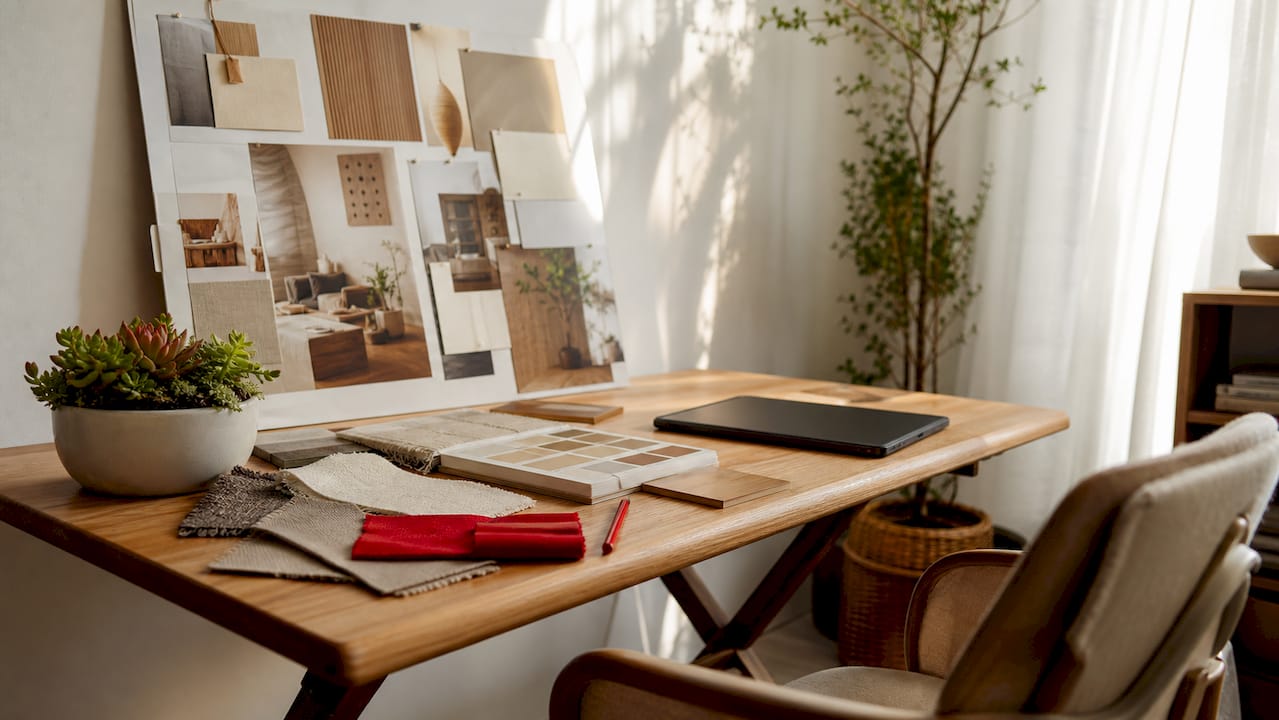
Natural wood textures are particularly popular in cabinetry and flooring. Timber acts almost like a thermal sponge in reverse here: it absorbs visual noise and creates a sense of calm that cooler materials simply cannot replicate. Paired with low-VOC paints in warm neutral tones, these choices also support better indoor air quality.
Curved architecture and furniture
Curved sofas, rounded dining tables, and arched doorways are among the most visible trending design styles in 2026. Curves soften a room visually and ergonomically. A rounded sofa invites you to sit differently, more relaxed and open, compared to a rigid rectangular frame. Arched doorways, in particular, are appearing in Singapore resale flat renovations as a relatively affordable way to add architectural character without structural changes.
Singapore HDB renovations are embracing curved built-in cabinetry and rounded kitchen islands as signature features. These elements cost more than straight-edged alternatives, so budget accordingly if this is a priority for your home.
Biophilic design and defined rooms
Biophilic design brings nature indoors through plants, natural stone, timber, and maximised natural light. In Singapore’s tropical climate, this approach works with the environment rather than against it. Large windows, indoor vertical gardens, and stone feature walls all contribute to a space that feels alive and grounded.
The shift from open-plan to defined rooms is equally significant. Separate dining, living, and work zones are returning because homeowners now want spaces that serve distinct functions. This is especially practical for Singapore families where working from home remains common.
- Use warm beige or terracotta as your base wall colour to anchor the warm minimalist palette
- Choose curved sofas or rounded coffee tables as a starting point if full architectural changes are not in budget
- Introduce biophilic elements through potted plants, a stone feature wall, or timber flooring before committing to larger structural changes
- Consider a partial partition or bookshelf divider to create defined zones without full wall construction
Pro Tip: When sourcing curved furniture and natural décor pieces, browse the warm minimalism collections available through Tspacemall’s East Singapore vendors for locally curated options that suit HDB proportions.
How is outdoor living evolving in 2026 singapore renovations?
Outdoor living is no longer a bonus feature. Renovations in 2026 treat outdoor spaces as genuine extensions of the home, designed for comfort, entertainment, and daily use. In Singapore, this applies to landed property owners with gardens and terraces, as well as HDB residents who can transform balconies into functional retreats.
The motivations behind these investments are clear. Durability, comfort, and utility now outrank aesthetics as the primary reasons homeowners spend on outdoor upgrades. A covered patio that keeps you cool during Singapore’s afternoon downpours delivers daily value. A decorative garden feature does not.
Here are the outdoor upgrades gaining the most traction in 2026:
- Covered patios and pergolas with weather-resistant roofing that allow year-round use regardless of Singapore’s unpredictable rainfall
- Outdoor culinary hubs featuring refrigeration, prep surfaces, and built-in grills, replacing the simple portable barbecue of previous years
- Composite decking made from recycled wood and plastic fibres, which resists Singapore’s humidity and UV exposure far better than natural timber
- Integrated outdoor lighting using LED strip systems and solar-powered fixtures to extend usable hours into the evening
- Multifunctional deck layouts that accommodate dining, lounging, and play areas within a single compact outdoor footprint
Pro Tip: Composite decking from brands like Trex or Millboard requires almost no maintenance in Singapore’s humid climate. It will not warp, splinter, or fade the way traditional timber does, making it a genuinely cost-effective choice over a five to ten year horizon.
For balcony renovations in HDB flats, focus on weather-resistant flooring, a small vertical garden wall, and a ceiling fan to create a breezy sanctuary that genuinely extends your living space.
What should singapore homeowners know about renovation costs in 2026?
Renovation costs in Singapore have risen sharply. The BCA Building Cost Index rose approximately 53% since 2019 due to labour shortages, import costs, and pandemic-era supply chain disruptions. That figure means a renovation that cost S$40,000 in 2019 now requires closer to S$60,000 for equivalent scope and quality.
For HDB flat owners, Singapore renovation budgets in 2026 typically range from S$25,000 to S$70,000 depending on flat type and renovation extent. A 3-room BTO with basic finishes sits at the lower end. A 5-room resale flat with full hacking, custom built-ins, and premium materials reaches the upper range.
| Flat Type | Renovation Scope | Estimated Budget (2026) |
|---|---|---|
| 3-room BTO | Basic finishes, no hacking | S$25,000–S$35,000 |
| 4-room BTO | Mid-range finishes, partial built-ins | S$35,000–S$50,000 |
| 5-room BTO | Full renovation, quality materials | S$45,000–S$60,000 |
| 4-room Resale | Hacking, new layout, full finishes | S$50,000–S$65,000 |
| 5-room Resale | Full hacking, premium built-ins | S$60,000–S$70,000+ |
Timeline planning is equally critical. Typical Singapore renovation timelines run 10–14 weeks for BTO flats and 16–22 weeks for resale properties. Resale renovations take longer because hacking permits add 10–14 working days to the approval process before physical work can begin.
- Submit permit applications as early as possible, ideally before key collection for BTO flats
- Begin design consultations 2–3 months before your intended start date to avoid contractor bottlenecks
- Build a 10–15% contingency buffer into your budget for material price fluctuations
- Avoid starting renovations during the Chinese New Year period when contractor availability drops sharply
Permit approval timelines are consistently underestimated by first-time renovators. Missing the submission window by even one week can push your entire project back by a month.
How can you integrate sustainability and technology into your 2026 renovation?
Sustainable renovations in 2026 are no longer a niche choice. They are the practical default for homeowners who want materials that last, spaces that breathe, and energy bills that do not climb every quarter. The good news is that sustainable choices and 2026 interior design trends overlap significantly.
Sustainable materials worth prioritising
Reclaimed wood, natural stone, and low-VOC paints are the three most impactful sustainable choices for Singapore homes. Reclaimed timber brings warmth and character while reducing demand for new logging. Low-VOC paints, such as those from Nippon Paint’s Odour-Less range or Dulux’s EasyCare line, reduce indoor air pollutants that accumulate in Singapore’s air-conditioned interiors. Natural fabrics like linen, jute, and organic cotton for soft furnishings complete the picture without synthetic off-gassing.
Smart home upgrades for 2026
Smart home upgrades in 2026 focus on comfort and efficiency rather than novelty. Automated blinds that respond to sunlight reduce solar heat gain in Singapore’s west-facing rooms. Smart ventilation systems, such as those from Panasonic’s WhisperSense range, adjust airflow based on occupancy and humidity. LED lighting controlled via apps like Philips Hue allows you to shift from cool task lighting to warm ambient light in the evening, supporting both energy savings and circadian rhythm.
AI tool usage in renovation planning has reached 23% in 2026. This means nearly one in four homeowners now uses AI-assisted tools for design visualisation and cost estimation before committing to a contractor. Tools like Planner 5D and RoomGPT allow Singapore homeowners to test warm minimalist layouts and curved furniture arrangements digitally before spending a single dollar. For a curated list of tools suited to local HDB dimensions, the design software options featured by Tspacemall are worth exploring.
- Choose low-VOC paints for all interior walls, especially in bedrooms and children’s rooms
- Install smart LED lighting in living and dining areas for flexible ambience and energy savings
- Use AI design tools to visualise curved furniture and biophilic elements before purchasing
- Opt for composite or reclaimed materials in flooring and cabinetry where budget allows
Pro Tip: Pairing smart blinds with a ceiling fan in west-facing rooms is one of the most cost-effective ways to reduce afternoon heat in Singapore without increasing air-conditioning load.
Key takeaways
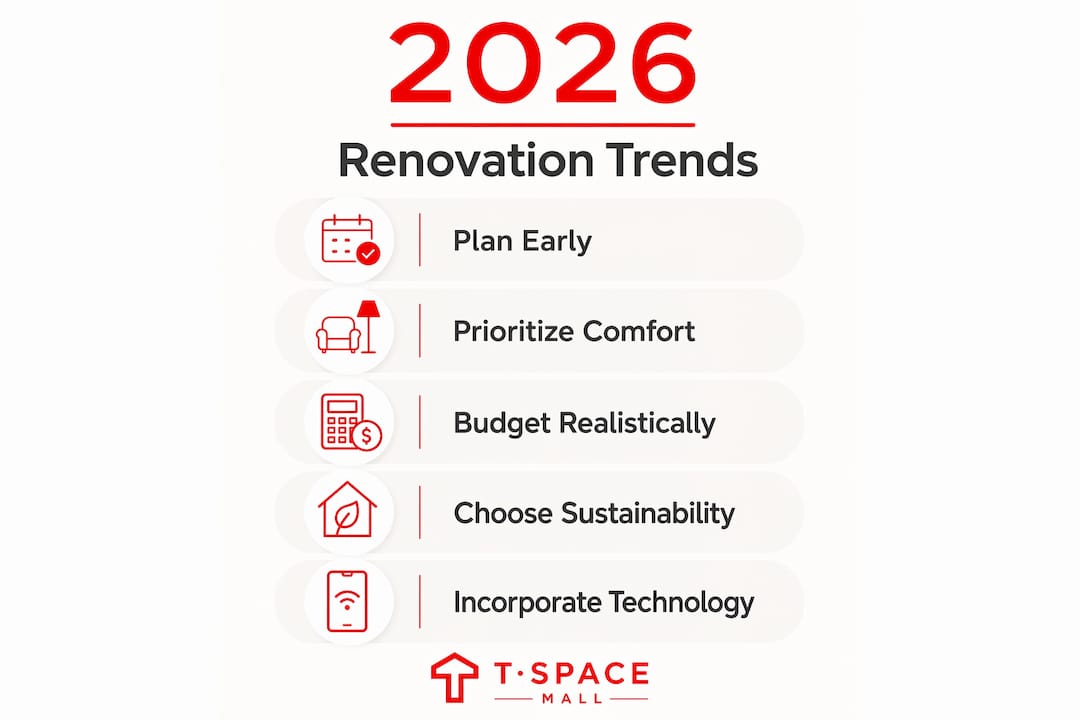
The most effective approach to 2026 renovations in Singapore is to plan early, budget realistically for cost inflation, and choose materials that serve both comfort and longevity.
| Point | Details |
|---|---|
| Comfort drives decisions | 68% of homeowners renovate for function and comfort, not aesthetics alone. |
| Budget for inflation | The BCA Building Cost Index rose 53% since 2019; build a 10–15% contingency into every budget. |
| Submit permits early | Hacking permits take 10–14 working days; late submission delays entire projects by weeks. |
| Warm minimalism leads | Earthy tones, natural wood, and curved forms define the dominant 2026 interior design style. |
| Sustainability pays off | Low-VOC paints, reclaimed timber, and smart lighting reduce costs and improve air quality long-term. |
Why i think most singapore homeowners are still underplanning their 2026 renovations
Having spent years observing how renovation projects unfold across Singapore’s HDB estates and landed homes, the pattern I see most often is not a lack of inspiration. It is a lack of lead time. Homeowners spend months browsing Pinterest boards and Instagram reels for warm minimalist ideas, then submit their permit applications two weeks before they want work to start. The result is a scramble that costs more and delivers less.
The trends themselves are genuinely worth adopting. Warm minimalism with quality natural materials ages beautifully in Singapore’s climate. Biophilic elements, when chosen thoughtfully rather than as a passing gesture, genuinely change how a home feels to live in. A single indoor tree or a stone feature wall does more for a room’s atmosphere than a complete furniture refresh.
What I would caution against is chasing every trend simultaneously. Local renovation cost inflation means that curved built-ins, premium stone surfaces, and smart home systems all carry a price premium in 2026. Pick two or three trends that genuinely suit your lifestyle and execute them well. A 5-room resale flat with beautifully done warm minimalism and one strong biophilic feature will outlast a flat that attempted every 2026 trend on a stretched budget.
My practical advice: use the first home renovation checklist as your planning anchor, submit permits the moment keys are in hand, and treat your contingency budget as untouchable until the final week of works.
— Jonathan
Bring your 2026 renovation vision to life with Tspacemall
Tspacemall is Singapore’s East-side renovation hub, housing trusted interior design firms, flooring specialists, lighting showrooms, and furniture retailers under one roof. Whether you are planning a BTO refresh or a full resale transformation, the experts at Tspacemall can help you translate 2026 trends into a home that genuinely works for your lifestyle and budget.

Absolook Interior Design, one of Tspacemall’s featured firms, specialises in warm minimalist and biophilic design tailored to Singapore HDB and private residential spaces. Woodcraft Interior Design brings expertise in curved furniture and natural material finishes that define the 2026 aesthetic. Visit Tspacemall to explore renovation packages, book a design consultation, and connect with contractors who understand both the trends and the realities of renovating in Singapore.
FAQ
What are the top interior design trends for singapore homes in 2026?
Warm minimalism, biophilic design, curved furniture, and defined room layouts are the leading 2026 interior design trends for Singapore homes. Earthy tones, natural wood textures, and arched architectural details are the most widely adopted features.
How much does a typical HDB renovation cost in 2026?
Singapore HDB renovation budgets in 2026 range from S$25,000 for a basic 3-room BTO to over S$70,000 for a fully renovated 5-room resale flat with premium finishes. The BCA Building Cost Index has risen approximately 53% since 2019, so budgets need to reflect current labour and material prices.
How long does a singapore HDB renovation take in 2026?
BTO renovations typically take 10–14 weeks, while resale flat renovations run 16–22 weeks. Hacking permit approvals add 10–14 working days before physical work can begin, making early submission critical to keeping timelines on track.
What sustainable materials work best for singapore renovations in 2026?
Reclaimed wood, low-VOC paints, natural stone, and composite decking are the most practical sustainable choices for Singapore homes in 2026. These materials support better indoor air quality, resist humidity, and reduce long-term maintenance costs.
Are AI tools useful for planning a singapore home renovation?
AI design tools like Planner 5D and RoomGPT allow homeowners to visualise layouts and furniture arrangements before committing to purchases. AI tool usage in renovation planning reached 23% in 2026, reflecting growing confidence in digital planning as a practical first step.
Recommended


